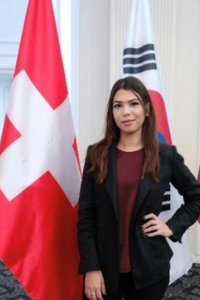
Panelists
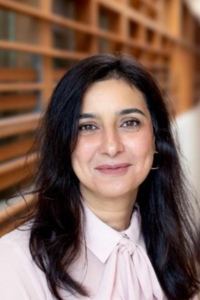
Lobna Chérif, PHD, CRT, CPPC, MBSP
Chair in Resilience – Professor
Department of Military Psychology and Leadership – Royal Military College of Canada
(CANADA)
Guided by a deep conviction that leadership and resilience can be intentionally cultivated, Lobna Chérif, PhD, CRT, CPPC, MBSP, has dedicated her career to translating psychological science into practical tools for those working in high-stress environments. This purpose shapes her work as Chair in Resilience at the Royal Military College of Canada (RMC) and as a Professor in the Department of Military Psychology and Leadership.
As the founding Director of the RMC Resilience Plus Program, Dr. Chérif leads transformative initiatives that strengthen resilience, leadership, and well-being within the Canadian Armed Forces (CAF) and across international military institutions. She is the creator of the internationally adopted Advanced Leadership and Resilience Training (ALRT) Certification and the author of Inner Journey: A Roadmap to Growth and Flourishing, a Canadian Defence Academy Press publication recognized for elevating the human dimension of readiness by strengthening the psychological and moral capacities essential for leadership excellence.
Trained as a cognitive researcher, Dr. Chérif earned her PhD in Psychology from Laval University and holds advanced certifications in Positive Psychology, Resilience Training, Coaching, and Mindfulness-Based Strengths Practices. Her research examines how psychological and cognitive frameworks can enhance leadership effectiveness, optimize performance, and support well-being in demanding contexts. Her work has shaped training and education across national and international defence organizations and has received widespread recognition and several prestigious awards.
Beyond academia, she supports her daughter’s award-winning non-profit, Gnome for a Home, which addresses homelessness through community-driven initiatives.
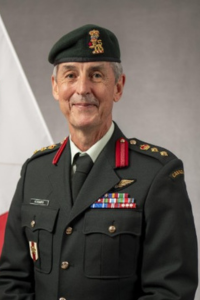
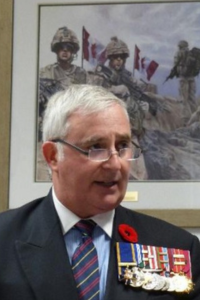
Colonel (DR.) Howard G. Coombs, OMM, CD
Director Commander’s Initiatives Group
Canadian Defence Academy Headquarters
(CANADA)
Colonel (DR.) Howard G. Coombs has been a member of the Canadian Armed Forces on both regular and reserve duty since 1979 and, before that, served as an Army Cadet. He is an infantry officer with the privilege of command from platoon to brigade.
Coombs graduated from the Canadian Forces Staff School, the Canadian Land Force Command and Staff College, the United States Army Command and General Staff College, and the US Army School of Advanced Military Studies, where he earned his master’s degree. He is currently assigned part-time as the Director Commander’s Initiatives Group, Canadian Defence Academy Headquarters, in Kingston, Ontario.
Additionally, Coombs received his PhD in military history from Queen’s University in Kingston, Ontario, and in his civilian employ, is an Associate Professor of History at the Royal Military College of Canada and Associate Director of Defence Engagement at the Queen’s University Centre for International and Defence Policy. Both institutions are also located in Kingston.
Coombs has had operational deployments as a military officer in the former Yugoslavia and Afghanistan. Furthermore, he deployed with Joint Task Force Afghanistan from September 2010 to July 2011 as a civilian advisor to the Task Force Commander.
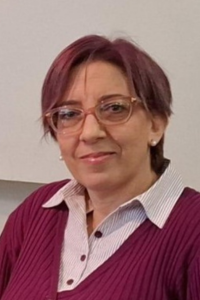
Elisabetta Di Giovanni, Ph.D.
Associate Professor of Social Anthropology and Ethnohistory
Director of the International Office
University of Palermo
(ITALY)
Prof. Elisabetta Di Giovanni (PhD) is associate professor of Anthropology at the Department of Psychology, Educational Science and Human Movement – University of Palermo. She is the convenor of the University of Palermo Summer School on “Migrants, Human Rights and Democracy”, which aim is to focus on forced migration, human mobilities and welcome refugees, and the director of the Human Rights and Democratic Coexistence Laboratory. Moreover, she is Rector’s Delegate for activities related to the promotion of peace, security and humanitarian diplomacy within university policies.
Her area of expertise lies in the field of migration issues, cultural diversity, marginalitzed communities, and vulnerable populations, employing anthropological and transformative justice approaches to promote social inclusion and human rights. Her research spans civil-military cooperation, with particular attention to humanitarian contexts. Her work aligns with key Sustainable Development Goals of the 2030 Agenda, particularly SDG 4 (Quality Education), SDG 10 (Reduced Inequalities), and SDG 16 (Peace, Justice and Strong Institutions).
Her publications address separated children’s migration, anti-Gypsyism in Europe, survival practices of excluded groups, and empowerment of marginalized communities. She has explored cultural diversity through multilingual families, cross-cultural care practices, and multiethnic coexistence. Through anthropological and ethnographic approaches, her scholarship focuses on how marginalized populations navigate social exclusion while maintaining cultural identity and agency.
BGEN (RET) Richard Giguère, OMM, MSM, CD
Brigadier-General (retired) Richard Giguère, OMM, MSM, CD is a Senior Fellow at l’École supérieure d’études internationales, Université Laval, Québec, Associate Professor, École nationale d’administration publique du Québec (ENAP), and Lecturer, Université du Québec à Chicoutimi. BGen (retd) Giguère specializes in issues related to international security, the transformation of warfare, and strategic management.
With more than 35 years of extensive experience in the Canadian Army (an infantry career with the Royal 22e Régiment), he has worked in operational environments in Canada (Oka Crisis) and abroad (Germany, Haiti, Kabul, Kandahar), diplomatic (Military Attaché in Washington) and academics. In particular, he commanded the 2nd Battalion Royal 22e Régiment and the Citadelle of Quebec, the Land Force Quebec Area (now the Canadian 2nd Division) and Joint Task Force (East), and the Canadian Forces College Toronto whose mission is to prepare high-ranking military and civilian leaders (Canadian and international) to face complex defence and security challenges.
He is a graduate of le Collège interarmées de Défense de Paris and holds a bachelor’s degree in military and strategic studies from the Royal Military College Saint-Jean and a Postgraduate diploma in strategic studies from l’Université Sorbonne Paris Nord. He completed a Senior Executives in National and International Security course at the Harvard Kennedy School and a Joint Professional Military Education (JPME) Phase II curriculum at the United States Joint and Combined Warfighting School in Norfolk, Virginia. He is the president of l’Institut militaire de Québec and the deputy director of the Center for International Security (CSI) associated with l’École supérieure d’études internationales (ESEI) at Université Laval.
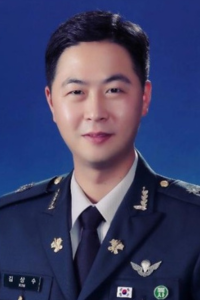
Dr. Sangsu Kim
Associate Professor of Philosophy
Korea Military Academy
(KMA)
Dr. Sangsu Kim is an Associate Professor of Philosophy at the Korea Military Academy (KMA) in Seoul, Republic of Korea, where he also serves as an international cooperation officer supporting bilateral academic engagement, exchange programs, and global research collaboration with foreign military academies and institutions. His academic background spans philosophy, ethics, and military studies, and his current research focuses on military ethics, artificial intelligence, and moral responsibility in autonomous systems.
Dr. Kim received his Ph.D. in Philosophy from the University of California, Santa Barbara, where he also completed his M.A., following prior graduate study in Western Philosophy at Yonsei University. He holds dual undergraduate degrees in Military Art & Science and German Studies from the Korea Military Academy.
His scholarly work examines the ethical foundations of war, the responsibility distribution in collective military action, and the emerging ethical implications of AI-enabled decision-making in warfare. He has published widely in Korean and international journals, including research on Just War Theory, reductive individualism, moral risk in war, and the ethics of autonomous weapon systems. His recent publications also explore cognitive warfare, hybrid warfare, algorithmic decision-making, and the moral boundaries between human agency and machine autonomy.
In addition to research, Dr. Kim has extensive teaching experience in courses such as Military Ethics, Moral Philosophy, Logic, Philosophy of Action, and Introduction to Philosophy. He previously taught at the University of California, Santa Barbara, where he served as a teaching assistant in critical thinking and ethics.
Dr. Kim’s current work contributes to international ethics education, AI governance in the military domain, and the philosophical foundations of moral responsibility in human–machine collectives.
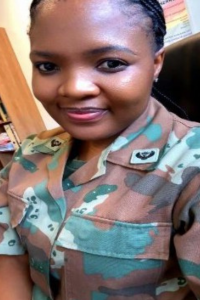
Maj Palesa Luzipo
Lecturer at the University of Stellenbosch University in Saldanha
(South Africa)
Maj Palesa Luzipo is a military officer, registered Industrial/Organisational Psychologist, and academic at Stellenbosch University’s Faculty of Military Science (South Africa), where she serves as Head of the Department of Industrial/Organisational Psychology (Military). She holds a Master’s degree in Industrial Psychology and has extensive experience in human resource management, leadership development, and psychological capacity building in high-demand and complex organisational environments.
Her work focuses on military and organisational psychology, leadership effectiveness, well-being, resilience, and positive and adaptive psychology, with a particular emphasis on mental health and spirituality in the workplace.
Her recent publications include a two-authored book chapters in Roots of Contemporary Human Experiences: A Journey Through Everyday Emotions. Moen M, Fontaine Y. 137-154. African Sun Media 17 Nov 2025.
To Access the following pages you must be logged into Symplectic Elements
https://researchoutputs.sun.ac.za/viewobject.html?cid=1&id=800883
https://researchoutputs.sun.ac.za/viewobject.html?cid=1&id=800884
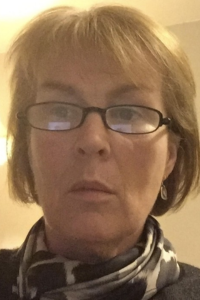
Gerri Matthews-Smith, PhD
Gerri Matthews-Smith, PhD, is Research Professor in the Business School at Edinburgh Napier University and Founder and Director of the Centre for Military Research, Education and Public Engagement (CMREPE). She also leads the Scottish Armed Forces Evidence and Research (SAFE&R) Hub and serves as the University’s Research Lead for Military Studies and is the lead for the newly formed Armed Forces Community Learning Academy at Edinburgh Napier University Her work focuses on human and organisational development, management, and wellbeing, with particular emphasis on armed forces studies, military transition, the mobile military child and veteran wellbeing.
Professor Matthews-Smith has held strategic leadership roles in research and doctoral education since 1997, including Director of the Doctor of Business Administration (DBA) programmes and Joint Director of Research for the Business School. She has supervised more than 65 doctoral completions and serves as an external examiner and mentor for doctoral programmes internationally.
Her work involves extensive collaboration with defence, public, and voluntary sector organisations and contributes to policy and practice through roles with the Edinburgh Military Education Committee (MEC) and the Council of Military Education Committees (COMEC). She publishes in peer-reviewed journals and edited volumes, contributes to academic peer review, and participates in public engagement and media activities related to veterans, military education, and transition.
Agata Mazurkiewicz, PhD
Assistant Professor at the Jagiellonian University in Krakow
(Poland)
Agata Mazurkiewicz holds a PhD in Political Science (Jagiellonian University in Krakow, Poland) and is an Assistant Professor in the Institute of Political Science and International Relations at the Jagiellonian University in Krakow.
Her research interests include civil-military cooperation and interactions, resilience and NATO affairs. She was a principal investigator and researcher in several national and international research projects devoted to NATO, resilience, as well as civilian input into deterrence and defence.
Her recent publications include a research monograph entitled Civil-Military Cooperation in International Interventions: The Role of Soldiers (Routledge, 2022) and a co-edited volume on Emerging Varieties of Resilience: Experiences from Germany, Poland and Ukraine (Routledge, 2025).
Travis Morris
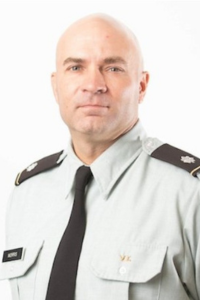
Travis Morris joined the faculty of Norwich University in 2011. He directs NU’s Peace and War Center. Morris holds a Bachelor of Arts in Criminology from Northern Illinois University, a Master of Science in criminal justice from Eastern Kentucky University, and a doctorate from the University of Nebraska.
He has published on information warfare and the relationship between policing, peacekeeping, counterterrorism, and counterinsurgency and is the author of the recent book, “Dark Ideas: How Violent Jihadi and Neo-Nazi Ideologues Have Shaped Modern Terrorism.” He has conducted ethnographic interviews in Yemen and published on how crime intersects with formal and informal justice systems in a socio-cultural context.
His research interests include the analysis of violent extremist propaganda, information warfare, and text network analysis. He is an active teacher in and out of the classroom and has created a series of recent grant-funded student learning trips in the Balkans, Central Asia, and the Middle East.
Professor Morris specializes in Information Warfare, Propaganda Analysis, Transnational Crime, and Terrorism/Violent Extremism. His work focuses on how state and non-state actors use narratives, digital platforms, and illicit networks to shape perceptions, mobilize supporters, and destabilize regions without kinetic force.
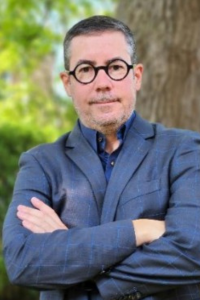
Ian Parenteau, Ph.D.
Assistant Professor of Political Science
Director of the International Office
Royal Military College Saint-Jean
(CANADA)
Dr. Ian Parenteau (PhD UQAM, DEA Université de Bourgogne à Dijon, MA UNB, BA (Honours) RMC/CMR) is an assistant professor of political science at the Royal Military College Saint-Jean, one of the two Canadian military universities. He also serves as the Director of the International Office, which is responsible for fostering and enhancing exchange opportunities and institutional partnerships between RMC Saint-Jean and other military academies around the world.
Since the creation of the International Association of Military Academies (IAMA) in 2017, he has been the secretary. In 2018-2019 he was the general secretary of RMC Saint-Jean. His area of expertise lies in the wide-ranging field of political ideologies, elections and electoral management bodies (EMB). He published in 2025 “Navigating the Limits: EMBs and the Struggle Against Disinformation and Foreign Interference,” Philosophy and Society (vol. 36, No. 2) and in 2023, he published (with D. Parenteau), Les idéologies politiques. Le
clivage gauche-droite (Political Ideologies. The Left and Right Divide), PUQ.
In 2025 he edited “The Impact of Contemporary Tensions, Conflicts and War on Regional and International Security: Case Studies,” Martello Papers (Centre for International and Defence Policy (CIDP), No. 49, February, 75 p. In 2024, he was a visiting professor at the University or Pristina (Kosovo).
In addition to his duties as a professor and researcher, Dr. Parenteau works for Élections Québec as a returning officer for an electoral riding in Montréal, Québec. He is a former cavalry officer, and he currently lives in Vieux-Longueuil, Québec, with his wife and two sons.
Alexandre Pelletier, PhD
Assistant Professor at Université Laval in Quebec City,
(Canada)
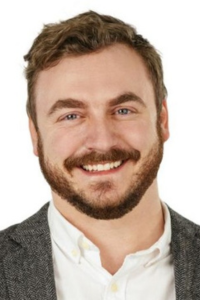
Alexandre Pelletier (PhD, Political Science, University of Toronto) is an Assistant Professor in the Department of Political Science at Université Laval, where he holds the Roméo Dallaire Chair in Teaching on Conflict and Peace.
His research examines civil wars, war-to-peace transitions, and the comparative politics of religious conflict, with a regional focus on Southeast Asia. He has conducted extensive fieldwork in Indonesia, Myanmar, and Thailand. He is the author of Clerics in Contention: Religious Authority and Islamist Mobilization in Indonesia (forthcoming, Cornell University Press) and co-author of Winning by Process: The State and Neutralization of Ethnic Minorities in Myanmar (Cornell University Press, 2022). He also edited Voices from the Field: Stories and Insights for Doing Fieldwork in the Social Sciences (PUQ, 2026). His recent work has appeared in Computers in Human Behavior, Perspective on Politics, and Comparative Politics. He is currently completing a book on war-to-peace transitions from the perspective of non-state armed groups.
Dr. Katherine Rossy
Assistant Professor of International History at the Royal Military College of Canada
Deputy Director of the Centre for International and Defence Policy (CIDP) at Queen’s University
(Canada)
Dr. Katherine Rossy is Assistant Professor of International History at the Royal Military College of Canada and Deputy Director of the Centre for International and Defence Policy (CIDP) at Queen’s University. Her work bridges historical scholarship and contemporary policy on war, humanitarianism, and international security. She received her PhD in History from Queen Mary University of London in 2018, where she held a Joseph-Armand Bombardier Canada Doctoral Scholarship, before completing a SSHRC Postdoctoral Fellowship at Carleton University from 2019 to 2022. Dr. Rossy has taught at institutions in Canada, France, and the United Kingdom.
Her research focuses on the history of humanitarianism, human rights, and the laws of armed conflict during the Second World War and early Cold War. She is currently completing two monographs: the first examines the emergence of United Nations emergency humanitarianism across all theatres of conflict during the Second World War and its immediate aftermath (1943–1948); the second explores United Nations efforts to locate and recover stolen and hidden children in Allied-occupied Germany after the war.
Alongside her historical scholarship, Dr. Rossy works on contemporary defence and security issues, including human security, hybrid warfare, and civil–military cooperation. In addition to numerous articles and book chapters, her recent publications include Rehabilitation Among the Ruins: The United Nations Relief and Rehabilitation Administration (co-edited with Dr. Samantha Knapton, Bloomsbury Academic, 2023; paperback reissue, 2025) and KCIS 2024: War and Human Security in an Ever-Changing World (co-edited with Peter Gizewski, Centre for International and Defence Policy, 2025). Her work has been recognized with several honours, including the Alice Wilson Award from the Royal Society of Canada (2019) and Concordia University’s Young Alumna of the Year Award (2020).
Massimiliano Schirinzi
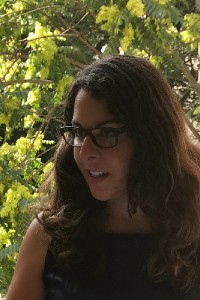
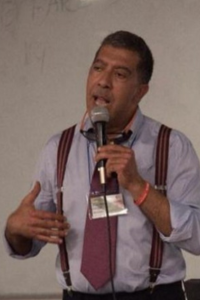
Massimiliano Schirinzi is a teacher of English (CELTA) and Italian as a foreign language (L2/LS), a linguistic and cultural mediator, and an oral examiner at the University for Foreigners of Perugia (Italy).
He is also the coauthor of the book “In Partenza: An introduction to Italian” (2013, with R. Guarino) and coauthor of the articles “Immigrant Prisoner Well-Being?” (2022, with M. Garro, C. Novara and E. Ayllon Alonso) in International Journal of Prisoner Health, and “Reversing the Trend: A Psychological Intervention of Young Immigrants in Sicily” (2018, with M. Garro) in Journal of International Migration and Integration).
He is also coauthor of “Rethinking Education and Mediation for Incarcerated Immigrants in Italy” (2024, with M. Garro, G. Lavanco, and M. Capitano) in the book “Unlocking Learning, International Perspectives on Education in Prison” (Brandeis University Press, Massachusetts). He is a coordinator of the Summer School “Migrants, Human Rights, Democracy” (UNIPA) together with Elisabetta Di Giovanni.
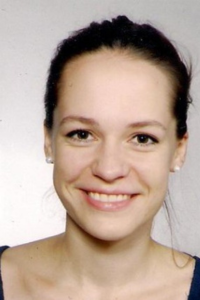
Sarah Von Felten, M.A.
Senior Researcher at Military Academy at ETH Zurich
(Switzerland)
Sarah von Felten, M.A., is a researcher, lecturer, and author. She holds a Master’s degree in History, English Linguistics, and Literature from the University of Basel, the oldest institution of higher education in Switzerland, and is currently pursuing a doctoral degree in Military History at the University of Bern. During her studies, she spent Erasmus+ exchange semesters at Ludwig-Maximilians-Universität in Munich and Humboldt-Universität in Berlin.
In addition to her academic background, she is fluent in several languages and has lived and worked in multiple countries, allowing her to combine scholarly insight with lived intercultural experience. This synthesis informs both her research and teaching, enabling her to develop a distinctive and interdisciplinary perspective.
Since 2020, she has served as a Research Associate at the Military Academy at ETH Zurich, within the Department of Leadership and Communication. She also teaches at the University of Lucerne, ETH Zurich, and the Military Academy—the Swiss center of competence for military science.
Her primary research interests include leadership, followership, and security studies, which she explores through a range of academic panels, presentations, and publications.